 Add Row
  Add
Add 


Did you know that over 39 million Americans hit the road each summer, and more than 30% experience preventable vehicle problems that derail their long trips? Whether you're planning a summer road trip across scenic highways or a quick getaway for the weekend, vehicle care during travel can make—or break—your adventure. This guide unpacks crucial facts, practical tips, and expert insights to help you prevent costly mishaps and ensure every journey is safe and enjoyable. Let's make sure your car is ready for the open road!
Startling Facts About Vehicle Care During Travel
"According to AAA, 39 million Americans travel by car during the summer road trip season, with over 30% experiencing preventable vehicle problems that disrupt their long trip."
- Unexpected breakdowns account for thousands of roadside emergencies during holiday weekends.
- A neglected car battery is among the top causes of long road trip failures.
As families, friends, and adventurous spirits prepare for their next summer road trip, it's important to understand just how often poor vehicle care during travel leads to major headaches. Between 30–40% of roadside calls each year happen because of issues that could have been caught during a simple maintenance checklist before hitting the road. Whether it’s an undercharged car battery, a low fluid level, or worn tires, overlooking basic checks can result in your trip taking a turn for the worse. Being proactive doesn’t just safeguard your vacation—it also helps you avoid costly repairs that can sour the fun of an open road adventure.

What You'll Learn About Vehicle Care During Travel
- How to prepare your vehicle for a summer road trip using a maintenance checklist.
- The critical steps for ensuring your car battery, air conditioning, and emergency car kit are road trip ready.
- Expert advice on mitigating costly mistakes and making your long drive safe and comfortable.
By the end of this guide, you’ll have a straightforward strategy to follow, tools to help prevent car trouble, and professional tips that even Subaru service experts recommend for long, enjoyable journeys. Whether you’re prepping for the heat of a summer road trip or navigating the challenges of cross-country travel, this article empowers you to make sure your vehicle is always in good condition.
Essential Vehicle Care During Travel: Road Trip Preparation
The foundation of any successful long road trip or summer escape is smart, proactive vehicle care. Drivers often overlook essential steps, assuming their car is ready just because it handled the daily commute. But distance, high temperatures, and heavy loads present new challenges. Pre-trip inspections using a proven maintenance checklist can eliminate most surprise breakdowns and expensive repairs. Making sure your car is ready for the open road is particularly important when you’re traveling with family or in remote areas where help may be far away.
From verifying the condition of your tires to checking your fluid levels and inspecting your emergency car kit, every detail matters when preparing for a long drive. Don’t let preventable mistakes disrupt your adventure—let’s break down the must-do steps to ensure your vehicle stays in working order for the entire journey. Vehicle care during travel is less about luck and more about planning.
Maintenance Checklist for Summer Road Trips
- Inspect tire pressure and tread for a safe long drive.
- Check and top off all fluids, including coolant and windshield washer.
- Verify brake system condition before any long trip.
- Review air conditioning performance, especially for hot weather travel.
- Ensure headlights, taillights, and brake lights function properly.

Following a thorough maintenance checklist is essential for any summer road trip. Start with your tires—make sure they’re inflated to the manufacturer’s recommended levels and examine the treads for signs of wear or embedded debris. Change or top off your engine oil, coolant, and brake fluid. A neglected cooling system in hot weather can quickly leave you stranded on the side of a highway.
Don’t forget your air conditioning. Even short trips become uncomfortable—if not dangerous—in high heat without proper cooling. Confirm all lights and signals are working for maximum visibility and safety on the open road. Most breakdowns during long trips happen for reasons that would have shown up during a pre-trip check, so a little preparation goes a long way in preventing car trouble.
Subaru Service and Special Vehicle Maintenance Tips
- Manufacturer-recommended checks for Subaru service and other makes.
- Engine, transmission, and all-wheel drive system evaluations.
If you drive a Subaru—or any modern vehicle—following the official Subaru service schedule can add years to your vehicle’s reliable operation and boost performance on a long trip. Subaru drivers should pay special attention to their unique all-wheel drive systems, ensuring all fluids are at the right level and that transmission fluid is in good condition. A trusted service provider can assess engine health, inspect belts and hoses, and check for any leaks that could interfere with a successful road trip.
For all vehicles, review the owner’s manual for specific instruction regarding scheduled maintenance intervals. Services such as oil changes, brake inspections, and alignment checks are often overlooked in the rush to start a vacation, but they’re foundational for vehicle care during travel. Don’t skip a quick trip to your dealership or mechanic; a comprehensive check—especially when combined with your personal emergency car kit—will ensure your ride is ready for whatever the open road has in store.
| Checklist Item | Why It's Important | Recommended Action |
|---|---|---|
| Tires & Pressure | Ensure a safe and fuel-efficient long road trip | Check pressure and inspect treads for damage |
| Fluids (oil, transmission, brake, coolant) | Prevent car trouble from overheating or part failure | Top off or replace fluids; change oil if needed |
| Car Battery | Avoid being stranded with a dead battery | Test charge and replace if over 3 years old |
| Air Conditioning | Stay comfortable during hot weather travel | Test cooling, recharge if necessary |
| Lights and Wipers | Maximize visibility and safety on the open road | Replace burnt-out bulbs, check wiper blades |
| Emergency Car Kit | Be prepared for emergencies on long trips | Pack essentials for breakdown and safety |
Long Trip Car Kit Essentials: What to Pack
Packing a solid car kit is as important as any mechanical check when it comes to vehicle care during travel. Road trips can be unpredictable—flat tires, traffic delays, or sudden weather changes can create tough situations far from help. Building your emergency car kit with essentials gives you peace of mind and makes sure you’re ready for almost anything the journey brings. A little preparation can mean the difference between a minor delay and a major disruption to your vacation plans.
Every long drive is different, but these universal packing recommendations will help ensure your car is ready for the open road, regardless of destination or weather. By tailoring your kit to both the vehicle and the passengers, you help prevent car trouble and ensure a smooth ride from start to finish.
Building Your Emergency Car Kit
- Portable tire inflator and spare wheel
- Jumper cables and car battery charger
- First-aid kit and emergency water supply
- Flashlight and warning triangles for road trips
- Mobile phone charger and paper map for long trips
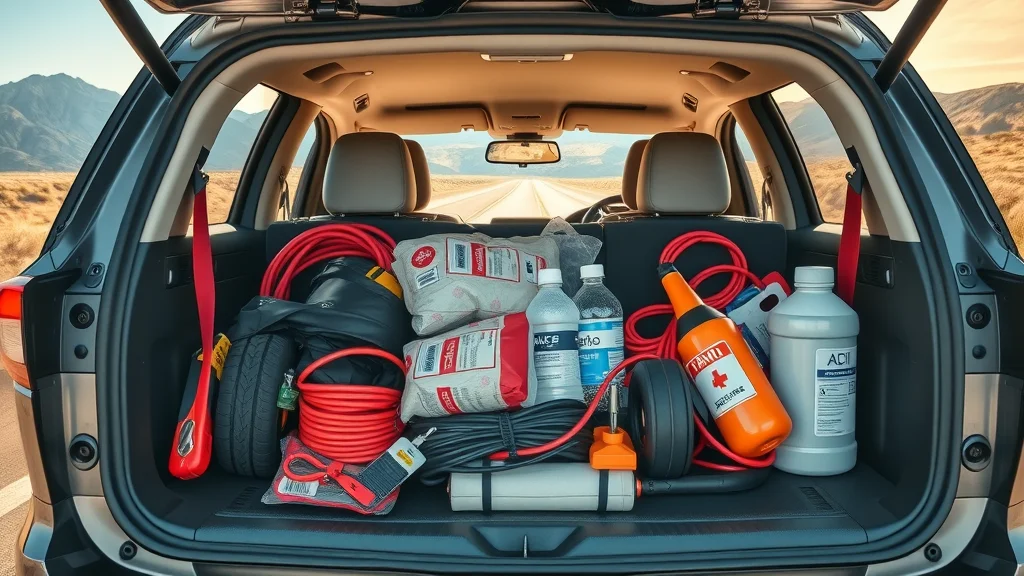
A truly effective emergency car kit keeps key survival and repair gear within arm’s reach. At a minimum, pack a portable tire inflator, jumper cables (or a portable jump-starter for car battery emergencies), a comprehensive first-aid kit, and enough water for all passengers. Add visibility items like warning triangles and a high-power flashlight for roadside emergencies during your long road trip. Today’s travelers rely on phones for directions, but a paper map and extra charger ensure you’re never lost or powerless if digital devices fail.
Refresh your emergency car kit before every trip—a missing or depleted item could leave you vulnerable during a breakdown. If your journey takes you over long, desolate stretches, extra water and food (like granola bars) could make all the difference. Family travelers should include comfort items as well as tools to keep kids occupied in case of unexpected delays.
Summer Road Emergency Supplies
- Sunscreen, hats, and extra bottled water
- Cooling towels and lightweight blankets for varied weather
Summer road trips mean exposure to intense sun and rapid changes in temperature. Add sunscreen and hats to your car kit to prevent sunburn during rest stops or roadside repairs. Cooling towels help manage heat during long drives, while lightweight blankets are a comfort if temperatures dip at night—or if you need to wait for assistance in your vehicle.
Staying hydrated is vital, especially when vehicle care during travel means you end up parked in the sun waiting for a tow. Emergency water is an essential for every journey and should be refreshed each season. Smart travelers stack their car ready steps with comfort and safety, ensuring an enjoyable road trip even if plans don’t go exactly as expected.
Preventing Vehicle Care Mistakes During Travel
Even careful planners sometimes overlook details that can scramble a long trip. To keep your journey running smoothly, recognize the most common summer road trip pitfalls—and how to avoid them. Making smart decisions about vehicle care during travel means learning from others’ mistakes and applying expert insights in advance, not after you’re stuck on the side of the summer road.
Routine maintenance and pre-trip inspections are only effective if you follow through. Missing a single check—like skipping a look at your car battery or assuming your air conditioner will run perfectly—can turn your vacation upside down. Let’s zero in on the top missteps and share actionable advice to keep you in control of your own adventure.
Common Summer Road Trip Pitfalls
- Forgetting to check tire pressure before a long trip
- Neglecting car ready inspections (fluids, brakes, air conditioning)
- Overlooking battery age and performance

Over 50% of roadside breakdowns during summer road trips can be traced back to forgotten basics like tire pressure and worn-out batteries. Skipping these small steps is a leading cause of car trouble that could have easily been avoided. Double check your dashboard for warning lights before you hit the highway, and test your tires using a digital gauge for a precise measurement. Remember, even luxury cars can suffer a flat or overheating engine if inspection is overlooked.
Older vehicles are even more prone to such problems, especially when it comes to hot weather driving. Battery performance drops significantly in the heat, and a battery older than three years may not survive a long, demanding journey. A careful car ready approach with specific focus on fluid levels, tire condition, and electrical systems can prevent these breakdowns—so you spend your summer making memories, not waiting for a tow.
Expert Advice to Avoid Costly Repairs
"A simple safety check can save you hundreds in emergency repairs or towing fees during a long road trip." — Automotive Service Professional
Experts repeatedly emphasize that spending a few minutes now can save hours of frustration and loads of money. Routine pre-trip checks not only ensure a safe and enjoyable road trip, but they also protect your investment in your vehicle. If you don’t feel confident inspecting your car yourself, reputable service centers—such as those specializing in Subaru service—can perform comprehensive checks tailored to your car’s make and model.
The key is to do more than the usual daily driver routine. Clean out the trunk for improved gas mileage, bring along your emergency car kit, and keep a note of any dashboard indicators or odd noises. These proactive steps will help you avoid expensive repairs, keep your trip on track, and ensure every mile of your long drive is free from unnecessary worry.
FAQs: Vehicle Care During Travel for Road Trips
Is it okay to leave your car for 2 weeks?
Generally, it’s fine to leave your car unused for two weeks if you take a few precautions. Before you go on vacation or a long trip, make sure the car battery is in good condition—consider disconnecting the battery or using a maintenance charger if you're worried about battery drain. Check fluid levels, ensure tires are inflated, and park in a shaded, secure spot. A lightweight car cover can protect the finish and help prevent car trouble when you return. Taking these steps follows best vehicle care during travel practices and helps ensure your car is ready to go when you get back.

What is the 30 60 90 rule for car maintenance?
The "30 60 90" rule refers to service intervals for critical maintenance tasks—at 30,000, 60,000, and 90,000 miles. At each of these milestones, your car manufacturer recommends key checks such as changing engine oil, inspecting and replacing filters, servicing the brake system, and evaluating the transmission system. Subaru service centers and other reputable mechanics use this rule to keep cars in good condition and prevent costly car trouble. Following these milestones is a smart way to ensure your car is always car ready for any long road trip.
How long can a car sit without being driven by a battery?
A healthy car battery can typically last for about two weeks without issue, but older batteries or high-tech vehicles with lots of electronics may struggle after just a week. If you plan an extended vacation or know your car will sit unused, use a trickle charger to maintain charge, or disconnect the battery to avoid parasitic drain and prevent car trouble. Regular starts, even if not driving far, help keep the battery and other components in good condition. Proper vehicle care during travel and absence is key to avoiding an unwanted dead battery.
What to do with your car when you go on vacation?
When leaving your car for vacation, prepare it by filling the fuel tank, checking all fluid levels, and ensuring the car battery is healthy. Inflate tires to the recommended pressure and consider leaving the parking brake off (if parked on a flat surface) to prevent sticking. Use a car cover for protection and, if possible, ask a friend to start the engine and move the car occasionally. These smart steps in vehicle care during travel minimize risk of car trouble and ensure your car is ready for any long drive upon your return.
Key Takeaways: Smart Vehicle Care During Travel Makes for a Successful Long Trip
- Pre-travel preparation is crucial for a worry-free summer road trip.
- A well-equipped emergency car kit and regular maintenance safeguard your long drive.
- Don’t rely solely on last-minute checks—plan ahead for every journey.

Watch this 2-minute video summarizing pre-trip inspection steps, how to pack your emergency car kit, and get expert advice on avoiding breakdowns. See visuals of hands checking car fluids and tires, loading the trunk with supplies, and hear from automotive professionals on smart road trip prep.
Conclusion: Prioritize Vehicle Care During Travel to Avoid Costly Mistakes
- Enjoy peace of mind knowing your vehicle is road trip ready.
- Protect your investment and safeguard your family on every long trip.
"Preventative car care today is the best way to avoid breakdowns tomorrow."




Write A Comment